

The Inside Game
Most business owners believe exiting means selling to an outsider. That belief eliminates one of the most powerful exit options available without being noticed.
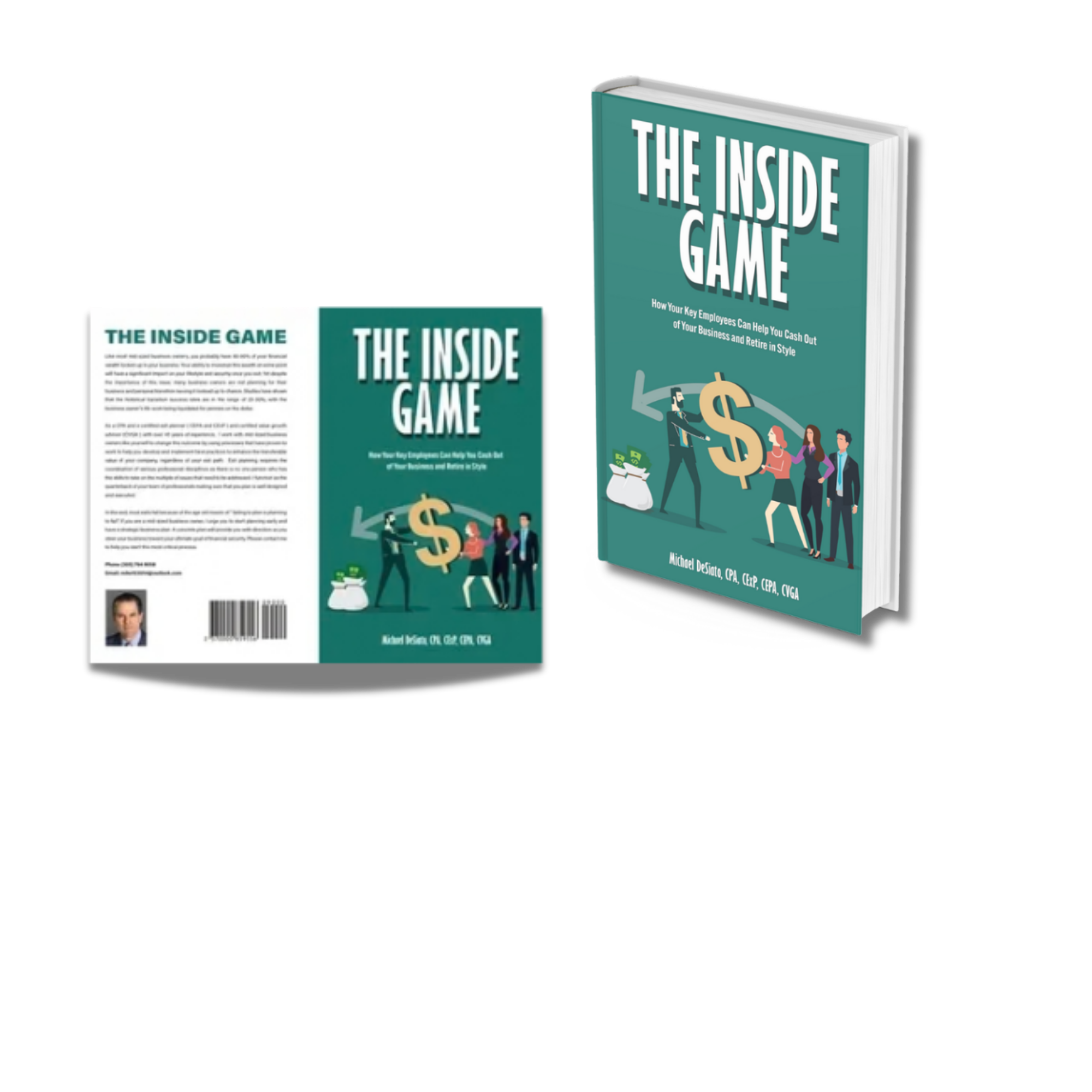
The Inside Game, authored by BTS founder Michael DeSiato, CPA, CExP, CEPA, CVGA, explores the internal exit path many owners overlook.
The book reflects how we think about exits. Not as transactions, but as outcomes shaped by preparation long before ownership changes hands. Transitioning ownership to family members or key employees can preserve value, protect legacy, and create flexibility, but only when structured correctly.
The Inside Game explains what must be in place for an inside transfer to work, and why proper preparation determines whether it succeeds or fails unnoticed.
What Owners Really Want from Exit Planning

Most exit plans fail because they focus on the transaction instead of the business realities that matter years earlier.
Owners are not starting with a sale in mind. They are starting with pressure, uncertainty, and questions about profitability, control, value, and what comes next.
Effective exit planning addresses what owners care about now. Stronger cash flow, a business that does not depend on them, clear priorities, honest value insight, real options, personal readiness, and execution that actually happens.
Exit planning is not about preparing to sell. It is about building a business that creates choices.
The right time to start is while you still have them.
Articles
Are You Truly Ready to Exit Your Business?
Most owners believe they are prepared for a transition, yet very few have taken the disciplined steps required to protect value, reduce risk, and transfer a business on their terms. This article outlines the practical realities behind exit readiness, the common gaps that erode value, and the structured approach required to build a company that is transferable, not just sellable.
The Two-Step Exit Plan: Build Value Before You Transfer It
Most exit plans focus on the transaction. The disciplined approach focuses on building value first. This article explains the Two-Step Exit Plan framework, helping owners strengthen cash flow, reduce operational risk, and increase company value before any transition conversation begins. Exit planning is not about timing the market. It is about preparing the business.
Insights for Business Owners Planning What Comes NextBig
Thought Leadership | Exit Readiness | Value Growth | Strategic Capacity
Every event we host is designed with intention, from the atmosphere we create to the way each session flows.
Exit Planning Fundamentals
Why Business Owners Must Start Exit Planning 3–5 Years Before Their Exit Close with urgency and timing. Once owners understand value, risk, and framework, this becomes the natural call to act.
Building a Transferable Business
Start with value creation and transferability. This answers the owner's first question: Is my business actually sellable?
The Three Legged Stool: What Makes an Exit Plan Truly Successful
Then expand into the holistic framework: Business, Financial, Personal.Business Continuity Planning
Next establish protection and continuity. This introduces the Five D's and reinforces that exit planning is not only about voluntary exits.
Explore our collection of whitepapers focused on Exit Planning Strategies and Strategic Capacity, created to help business owners build stronger, more transferable, and more valuable businesses.
These resources go beyond transaction planning. They address the operational, financial, leadership, and personal decisions that influence long term business value and successful transitions.
Whether you are preparing for an exit in the near future, building optionality for the future, or strengthening the business you intend to keep, these guides provide practical frameworks, real world perspectives, and actionable insights to help you make informed decisions.
Because the best exits are rarely built at the moment of transition. They are built years in advance.